Fire Damage
Heat, smoke, and soot affecting mechanical and electrical components.

AGI provides independent engineering inspection of damaged, malfunctioning, and high-risk escalators—supporting safe repair, restoration, replacement, and return-to-service decisions.
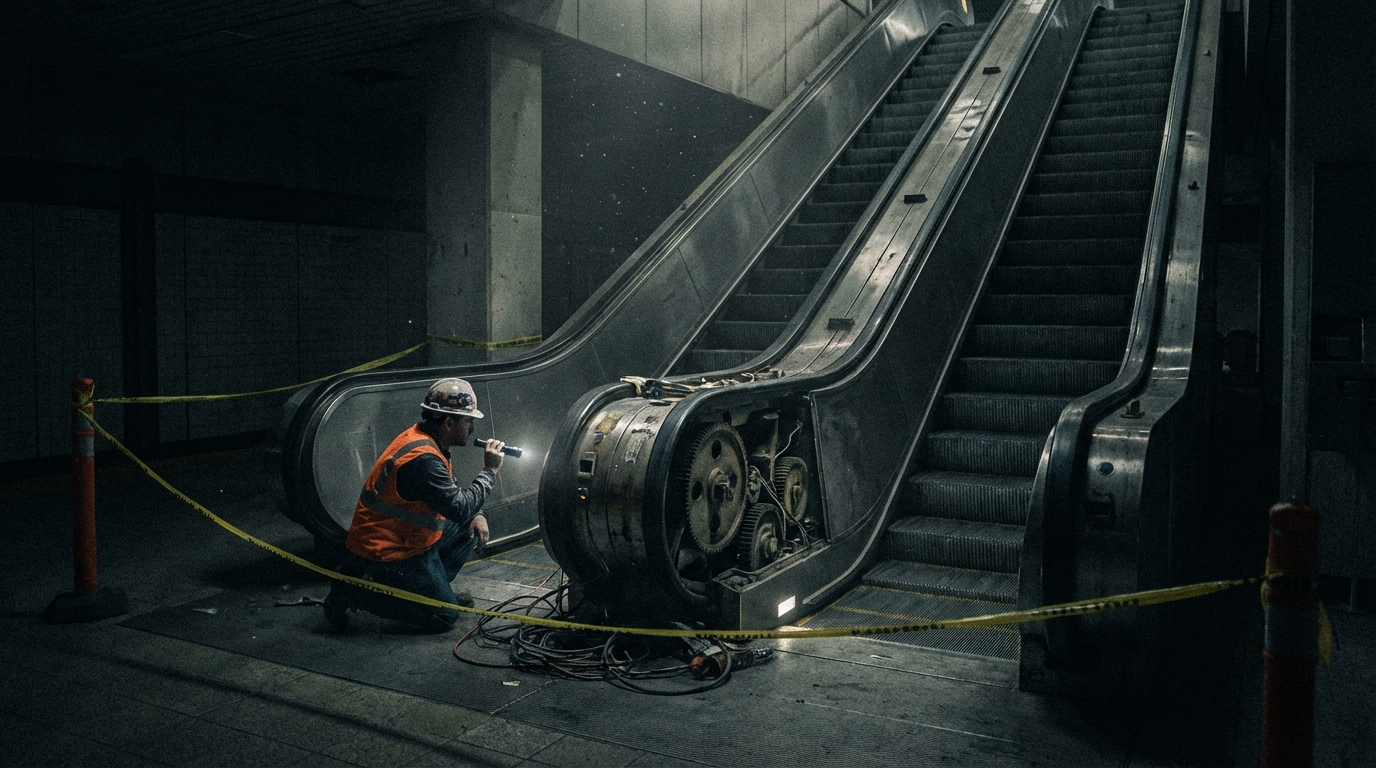
Escalators are complex mechanical and electrical transportation systems. Hidden defects in drive, brake, control, safety, and structural components may remain undetected after an incident.
Heat, smoke, and soot affecting mechanical and electrical components.
Moisture, corrosion, contamination, and deterioration.
Wear or failure of chains, bearings, rollers, and drive systems.
Controller, wiring, motor, sensor, or protection faults.
Transient damage to controls and protection devices.
Physical damage from accidents, foreign objects, or movement.
The inspection addresses both visible and hidden conditions affecting safety, reliability, and long-term performance.
Component
Inspection focus
Steps and step chain
Wear, deformation, alignment, elongation, tension, and mechanical damage
Handrail system
Speed synchronisation, tension, wear, and physical condition
Drive motor and gearbox
Overheating, contamination, leakage, wear, and operational integrity
Main drive chain and brakes
Tension, alignment, damage, safe stopping, and holding performance
Controller and safety switches
Electrical faults, contamination, control errors, and protective response
Comb plates and guide rails
Alignment, damage, obstruction risk, wear, and deformation
Structural framework
Corrosion, distortion, impact damage, and structural integrity
AGI examines the complete system rather than assessing a single visible symptom.
Identify immediate passenger and operational risks.
Examine steps, chains, rollers, motors, gearboxes, brakes, and drive components.
Inspect controllers, wiring, sensors, safety circuits, and protection systems.
Determine the probable cause based on inspection evidence.
Assess restoration feasibility and validate the technical basis of proposed work.
Document findings, risk, recommendations, and supporting evidence.
A structured inspection keeps the safety decision traceable from isolation through reporting.
01
Evaluate immediate risk and confirm whether isolation should continue.
02
Inspect structural, mechanical, and electrical components for visible damage.
03
Examine drive systems, chains, rollers, brakes, and moving components.
04
Inspect controllers, motors, sensors, wiring, and safety circuits.
05
Determine probable cause using engineering evidence.
06
Assess whether safety can be restored through repair or restoration.
07
Evaluate reliability and future maintenance considerations.
08
Provide findings, recommendations, and supporting documentation.
The decision to return an escalator to service must be supported across the whole system.
AGI evaluates whether safety and reliable performance can be restored, then identifies the testing required before return to service.
Independent escalator inspection for public and high-traffic environments.
Objective analysis focused on passenger safety, technical justification, and lifecycle decisions.
Objective inspection based on evidence rather than equipment sales.
Identify the underlying cause, not only the visible symptom.
Assessment of the complete escalator system.
Evaluate whether repair or replacement proposals are technically justified.
Documentation for owners, insurers, and other stakeholders.
Recommendations that prioritise passenger safety and reliable operation.
Routine inspection and maintenance should follow manufacturer requirements and applicable regulations. Independent inspection is particularly valuable after fire, flooding, failure, impact, or major repair.
Often, depending on contamination, corrosion, and mechanical or electrical damage. Engineering assessment determines technical and economic viability.
Yes. Hidden defects in drive, brake, and control systems may not be visible during a routine check.
Yes. AGI can document condition, damage, probable cause, risk, and recommended corrective action for relevant stakeholders.
Clients receive an independent engineering report with observed damage, likely cause, risk assessment, and recommendations for repair, restoration, or replacement.
Before a damaged or malfunctioning escalator returns to service, arrange an independent engineering assessment of its condition, cause, and risk.