Evidence
Physical damage, fracture surfaces, burn patterns, deformation, deposits, wear marks and component condition.

A machine stops without warning. An electrical installation catches fire. A structural element fractures. A pressure system ruptures.
Although the incident may appear sudden, the failure itself may have developed over months or years.
Fatigue can accumulate under repeated loading. Corrosion can gradually reduce material strength. Electrical insulation can deteriorate through heat, moisture or age. Improper installation, excessive operating demand or inadequate maintenance can reduce the safety margin until the asset can no longer perform as intended.
The visible damage is often only the final stage of a much longer engineering process.
Approved Group International applies forensic engineering principles to reconstruct that process. We examine physical evidence, operating history, materials, design conditions and failure mechanisms to determine the most probable cause of machinery failures, electrical incidents, structural damage, construction defects and industrial losses.
Our objective is not merely to identify the component that failed.
It is to explain:
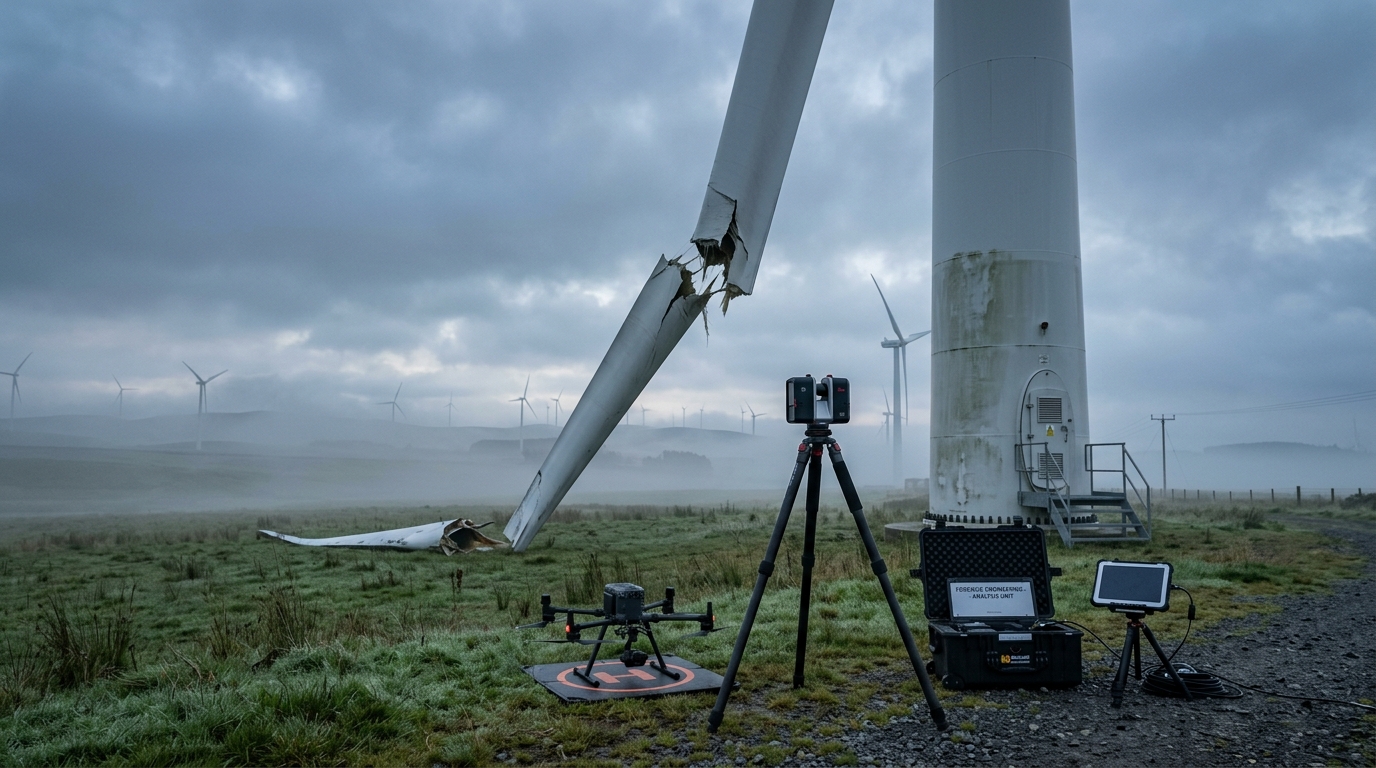
The first visible damage may not be the point where the incident began. A failed component can be the cause of an event, a consequence of another failure or part of a wider sequence involving several interconnected systems.
The role of the forensic engineer is to distinguish between these possibilities.
What We Observe
What We Investigate
Fractured shaft
Fatigue, overload, misalignment, material defect or stress concentration?
Electrical fire
Loose connection, insulation breakdown, contamination, overloading or arc activity?
Collapsed structure
Excessive loading, corrosion, design limitation, construction defect or foundation movement?
Failed bearing
Lubrication loss, contamination, incorrect installation, vibration or excessive load?
Cracked weld
Fatigue, poor workmanship, residual stress, unsuitable procedure or material incompatibility?
Pressure vessel rupture
Overpressure, corrosion, material degradation, thermal stress or operational error?
Repeated equipment trips
Progressive deterioration, control instability, electrical disturbance or process interaction?
Excessive vibration
Imbalance, resonance, looseness, bearing damage, misalignment or foundation movement?
A conventional inspection may confirm that an asset is damaged.
A forensic engineering investigation seeks to determine why that damage occurred.
Visual comparison
Condition Assessment
Forensic Engineering Investigation
Identifies current condition
Reconstructs the sequence of failure
Records visible damage
Interprets physical evidence
Recommends repair or replacement
Determines the probable failure mechanism
Focuses on the present state
Examines events before, during and after the incident
May identify non-compliance
Evaluates causation and contributing factors
Supports maintenance planning
Supports technical, insurance and legal decisions
Forensic engineering is the application of engineering science to investigate failures involving machinery, structures, electrical systems, industrial equipment and other engineered assets.
The investigation may include:
Physical damage, fracture surfaces, burn patterns, deformation, deposits, wear marks and component condition.
Drawings, specifications, maintenance history, inspection reports, operating data and manufacturer documentation.
Engineering calculations, materials examination, non-destructive testing, laboratory analysis and specialist testing where appropriate.
Evaluation of the sequence of events, initiating mechanism, contributing conditions and resulting damage.
The outcome is a structured engineering opinion based on the available evidence.
Where the evidence is incomplete, disturbed or inconclusive, the limitations are identified clearly. Conclusions are not extended beyond what the engineering evidence can reasonably support.
Approved Group International approaches each investigation through four core principles:
Principle
What It Means
Observe
Document the scene, damage and physical condition before forming conclusions.
Analyse
Apply engineering science, calculations and testing to evaluate possible failure mechanisms.
Verify
Compare each hypothesis against the physical evidence, records and operating conditions.
Conclude
Determine the most probable cause and communicate the findings with appropriate technical limitations.
Every investigation is different.
The equipment may be similar. The visible damage may appear familiar. The final failure may have occurred in the same location.
However, the underlying cause can still differ significantly.
A fractured shaft may result from fatigue in one case, overload in another and a manufacturing defect in a third. An electrical fire may originate from insulation deterioration, excessive current, poor termination, moisture ingress or damage caused by another incident.
For this reason, forensic engineering must remain evidence-led.
AGI does not begin with a predetermined conclusion. We begin with the physical evidence and allow the engineering analysis to establish what the evidence demonstrates.
Engineering failures occur across every industry, asset class and operational environment.
Whether the incident involves a single failed component or a major industrial loss, our investigations are guided by the same principle—identify the evidence, understand the failure mechanism and determine the most probable root cause.
Investigation Area
Typical Assets & Incidents
Engineering Focus
⚙ Machinery & Mechanical Failures
Pumps, turbines, compressors, generators, gearboxes, bearings, conveyors, manufacturing equipment
Fatigue • Wear • Lubrication • Misalignment • Overload • Material Failure
⚡ Electrical Failures
Switchboards, transformers, motors, cables, electrical distribution systems, electrical fires
Arc Faults • Insulation Breakdown • Thermal Damage • Loose Connections • Short Circuits
🏗 Structural Failures
Buildings, bridges, steel structures, concrete structures, foundations, retaining walls
Cracking • Corrosion • Excessive Loading • Material Behaviour • Structural Stability
🔥 Fire & Explosion Investigations
Industrial fires, process plant incidents, pressure vessels, combustible failures
Fire Origin • Ignition Source • Explosion Sequence • Equipment Failure
🧱 Construction & Engineering Defects
Building defects, waterproofing, installation failures, workmanship issues
Design Compliance • Construction Quality • Material Performance
🏭 Industrial & Process Incidents
Manufacturing facilities, utilities, production lines, industrial accidents
Equipment Interaction • Operational Factors • Process Reliability • System Failure
Every forensic investigation follows a structured engineering process.
🚨 INCIDENT
│
▼
🔍 Scene Examination
│
▼
📷 Evidence Collection
│
▼
⚙ Engineering Analysis
│
▼
🔬 Failure Mechanism
│
▼
📑 Root Cause Report
Each stage builds upon the previous one, ensuring that engineering conclusions are supported by physical evidence, technical analysis and recognised engineering principles.
No two failures are exactly alike.
Two identical pumps may fail for entirely different reasons. One may suffer bearing damage caused by inadequate lubrication, while another may fail because of shaft misalignment or prolonged operation outside its design envelope. Similarly, an electrical fire may originate from deteriorated insulation, loose electrical connections, overloading or environmental contamination.
For this reason, Approved Group International investigates every incident independently.
Rather than relying on assumptions or standard checklists, we evaluate the available evidence, operating conditions, maintenance history and engineering data to determine the most probable cause of failure.
The result is an investigation that is technically robust, evidence-based and capable of supporting engineering decisions, insurance claims and dispute resolution.
Every engineering failure is investigated using a structured, evidence-based methodology.
While every assignment is unique, our approach remains consistent—preserve the evidence, understand the failure mechanism and determine the most probable root cause.
Step
What We Do
Purpose
① Secure & Preserve
Protect the scene and preserve critical evidence.
Ensure valuable evidence is not lost or altered.
② Examine & Document
Conduct site inspections, photographs, measurements and 3D reality capture where required.
Create an accurate record of the incident.
③ Collect & Review
Review engineering drawings, maintenance records, operating history and witness information.
Understand the asset's condition before failure.
④ Analyse & Test
Perform engineering calculations, specialist testing and technical analysis where appropriate.
Identify the physical failure mechanism.
⑤ Determine Root Cause
Evaluate all available evidence to establish the most probable cause and contributing factors.
Develop technically defensible engineering conclusions.
⑥ Report & Recommend
Prepare a clear technical report with findings and recommendations.
Support recovery, decision-making and future risk reduction.
Every investigation undertaken by Approved Group International is guided by four fundamental principles.
Principle
Our Commitment
🔍 Evidence First
Conclusions are based on physical evidence—not assumptions.
⚙ Engineering Science
Every finding is supported by recognised engineering principles and analysis.
⚖ Independent & Objective
Our role is to explain what the evidence demonstrates, regardless of who appoints us.
📈 Practical Outcomes
We provide recommendations that help reduce future failures and improve asset reliability.
Engineering failures are rarely caused by a single factor.
Material behaviour, operating conditions, maintenance practices, environmental influences and equipment design may all contribute to an incident.
For this reason, AGI does not rely on isolated observations or predetermined opinions. Every conclusion is reached only after the available evidence has been systematically examined and evaluated.
Where additional certainty is required, specialist laboratory testing, non-destructive testing or expert analysis may be incorporated into the investigation.
The outcome is an independent engineering opinion that is technically robust, evidence-based and clearly communicated.
Engineering failures occur wherever complex assets and systems operate.
Approved Group International provides forensic engineering investigations across a wide range of industries.
🏭 Industrial
⚡ Energy & Utilities
🏗 Construction
🚢 Infrastructure
Manufacturing
Power Generation
Commercial Buildings
Bridges
Process Plants
Electrical Utilities
Residential Developments
Ports & Marine
Production Facilities
Renewable Energy
Civil Engineering
Transportation
Warehouses
Water & Wastewater
Industrial Construction
Public Infrastructure
🚚 Commercial
⚖ Professional Services
🏥 Essential Services
🏢 Property
Logistics
Insurance Companies
Hospitals
Commercial Buildings
Retail Facilities
Loss Adjusters
Government Agencies
Facility Owners
Data Centres
Legal Professionals
Educational Institutions
Property Managers
Whatever the industry, every investigation follows the same evidence-based engineering methodology.
Our investigations are guided by engineering science, objective analysis and practical industry experience.
What Sets AGI Apart
What It Means for You
🔍 Evidence-Based Investigations
Every conclusion is supported by physical evidence and engineering analysis.
⚙ Multi-Disciplinary Expertise
Mechanical, electrical, structural and industrial engineering knowledge in one investigation team.
⚖ Independent & Objective
Technical opinions remain impartial and evidence-driven.
📑 Technically Defensible Reports
Reports prepared to support engineering decisions, insurance claims and legal proceedings.
📈 Practical Recommendations
Identify not only why a failure occurred, but how similar failures may be reduced in the future.
🌏 End-to-End Support
From initial site investigation through to final reporting and technical clarification.
A forensic engineering investigation is not only about explaining what happened.
It provides organisations with the technical information needed to support:
By understanding the root cause of failure, organisations can make more informed technical and business decisions.
Every investigation is conducted independently, objectively and in accordance with recognised engineering principles.
We let the evidence guide our conclusions—never assumptions.
We investigate machinery failures, electrical incidents, structural failures, construction defects, fire and explosion incidents, industrial accidents and other engineering-related failures across a wide range of industries.
Yes. Every investigation aims to identify the most probable root cause by analysing physical evidence, engineering data and recognised engineering principles.
Yes. Our investigations and technical reports are frequently used to support insurers, loss adjusters, legal professionals, asset owners and other stakeholders requiring independent engineering analysis.
No. Many investigations can be completed through site examinations and engineering analysis. Where additional verification is required, specialist laboratory testing or non-destructive testing may be recommended.
Yes. Where appropriate, our reports include practical recommendations to improve reliability, reduce operational risk and help prevent similar failures in the future.
When engineering failures occur, every decision should be supported by reliable technical evidence.
Whether you are responding to equipment failure, structural damage, an electrical incident or a complex industrial loss, Approved Group International provides independent forensic engineering investigations to help you understand what happened, why it happened and what to do next.
Speak with our forensic engineering team today.
📞 Phone: [Phone Number]
✉ Email: [Email Address]
🌐 Contact Us: [Contact Form Button]